

Bed Bug Control for Mattresses, Beds and Furniture: Complete Guide | Pestocart


If you've only treated the mattress, you've probably only treated part of the problem.
Bed bugs are among the most frustrating household pests because they hide in very small cracks, mattress seams, bed frames, sofas and furniture — and they don't stay in one place. Once an infestation begins, bed bugs can gradually spread from the mattress to the bed frame, sofa, cupboard, curtains and other nearby areas.
The good news is that early detection and a systematic approach make control much easier. If you've noticed small insects, dark spots, shed skins or unexplained bites around your sleeping area, this guide covers how to identify bed bugs, control them across the whole affected area, avoid common mistakes, and prevent them coming back — including where products like Pestocart's Bed Bug Protection range fit in.
What Are Bed Bugs?
Bed bugs are small, reddish-brown insects that feed on blood, usually active at night and hiding during the day in dark, protected areas — mattress seams and piping, bed frames, headboards, box springs, sofa seams, furniture joints, cracks and crevices, behind or underneath furniture, baseboards, and nearby fabric like curtains.
Bed bugs can survive for extended periods without feeding, which is one reason simply leaving a room unused doesn't solve an infestation. A bed bug problem also doesn't mean a home is dirty — they enter clean homes through luggage, used furniture, clothing and other belongings.
How to Identify a Bed Bug Infestation
Make sure the pest is actually a bed bug before starting treatment.
Live bed bugs
Small, flat, oval, reddish-brown insects — more swollen after feeding. Check mattress corners, stitching, headboards, frame joints, sofa seams, furniture cracks.
Dark spots
Small dark or blackish marks around mattress seams, pillow edges, piping, corners, headboard, box spring or sofa cushions.
Shed skins & eggs
Bed bugs go through several development stages — check cracks and seams carefully for shed skins or tiny pale eggs.
Unexplained bites
Reactions vary person to person — some show itchy red marks, others little or none. Treat bites as one possible sign, not proof on their own.
Why Bed Bugs Hide in Mattresses — and Beyond
Mattresses provide an ideal hiding environment — many seams, folds and protected areas, close to their food source. But treating only the mattress may not be enough. If bed bugs have moved into the bed frame, headboard, side tables, sofa, curtains, baseboards, or other cracks and crevices, the infestation can continue even after the mattress has been treated.
Effective control should cover the entire surrounding area, not just the visible insects.
How to Control Bed Bugs in a Mattress
Use a flashlight and check seams, corners, handles, the underside, piping, folds and areas around labels — look for dark spots, insects, eggs and shed skins.
Remove sheets, blankets, pillowcases and other washable bedding. Avoid carrying loose bedding through different rooms — bed bugs can accidentally spread. Place potentially infested items in sealed bags until treated.
Wash according to fabric care instructions and use a high-temperature dryer cycle when appropriate. Heat matters here — washing alone doesn't reliably kill bed bugs; a high-temperature dryer cycle of around 30 minutes for items that can tolerate it is a meaningful step.
Concentrate on mattress seams, bed frame, headboard, the floor around the bed, cracks and furniture joints. After vacuuming, seal and dispose of the contents carefully so insects don't escape.
A properly designed bed-bug-proof encasement helps isolate bed bugs inside the mattress and stops new bugs hiding inside it. Choose a durable option that fully surrounds the mattress with a secure zipper — encasements are a recommended part of an integrated control approach.
Bed Frame, Wooden Furniture & Sofas
Bed Frame
Inspect wooden joints, screw holes, cracks, the headboard, bed legs, support rails and where the frame meets the mattress. Vacuum accessible cracks before applying any pest-control product. If using a chemical treatment, always read the label and follow dilution, application area, ventilation and safety instructions — never apply a pesticide to a mattress, bedding or other surface unless the product label specifically allows it.
Wooden Furniture
Check drawer joints, drawer runners, back panels, screw holes, cracks, gaps between wooden parts, and undersides of tables and cabinets. Remove drawers and inspect the furniture and drawers separately, vacuum accessible areas, and clean clutter around the furniture. Apply any product only to surfaces the label permits.
Sofas and Chairs
Sofas and chairs near an infested bed can become secondary hiding spots. Inspect cushion seams, under cushions, sofa joints, armrests, back panels, the underside and wooden frame connections.
Treat the Whole Area — and Make the Bed an Island
One of the biggest mistakes is treating only the area where you see bed bugs. If you find them on your mattress, they may also be hiding along the path: Mattress → Bed Frame → Headboard → Side Table → Sofa → Baseboards. Inspect the complete sleeping area rather than just the visible spot. An integrated approach — inspection, physical removal, encasements, monitoring, heat treatment where appropriate, and carefully selected pesticide treatments — works better than relying on a single method.
A useful monitoring strategy: move the bed slightly away from the wall, keep bedding from touching the floor, and use bed bug interceptors under the bed legs. These devices trap bed bugs attempting to climb onto the bed and help track ongoing activity.
Using Bed Bug Control Products
Choose a product specifically intended for the pest and the application area. Before using any pest-control chemical:
- Read the complete product label
- Follow the recommended dilution, if applicable
- Use only the specified application areas
- Keep children and pets away per the label instructions
- Ensure appropriate ventilation
- Never exceed the recommended quantity
- Don't mix different pesticides unless the label specifically permits it
- Don't apply products to mattresses or bedding unless the label specifically allows it
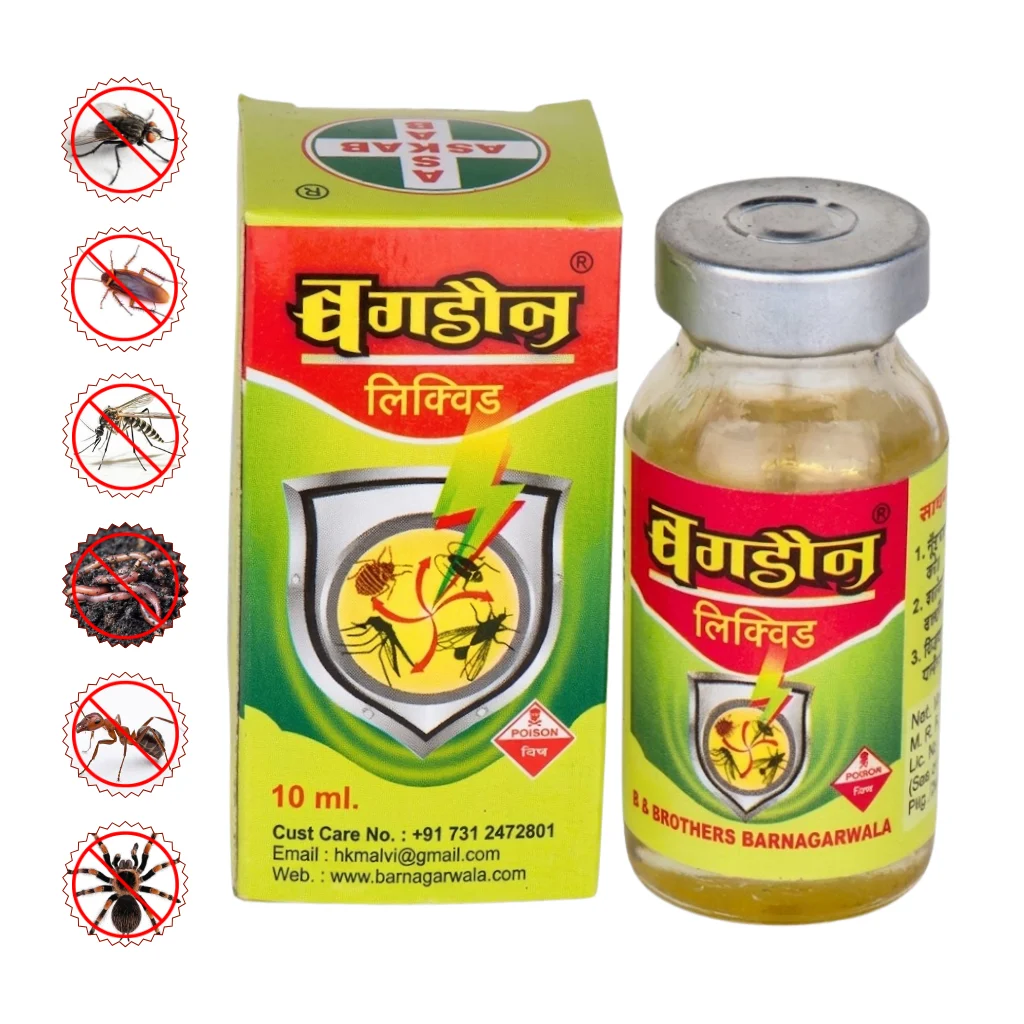
BUGDON LIQUID
Contains Cypermethrin 25% w/w, for cockroaches, bedbugs, termites, mosquitoes, flying and crawling insects. Spray on common hiding areas — wall corners, drain holes, dustbins, shelves, lofts — or mix 2–3 caps in water for floor cleaning. Avoid inhalation and skin contact; keep away from food, animal feed and drinking water; wash hands after use.
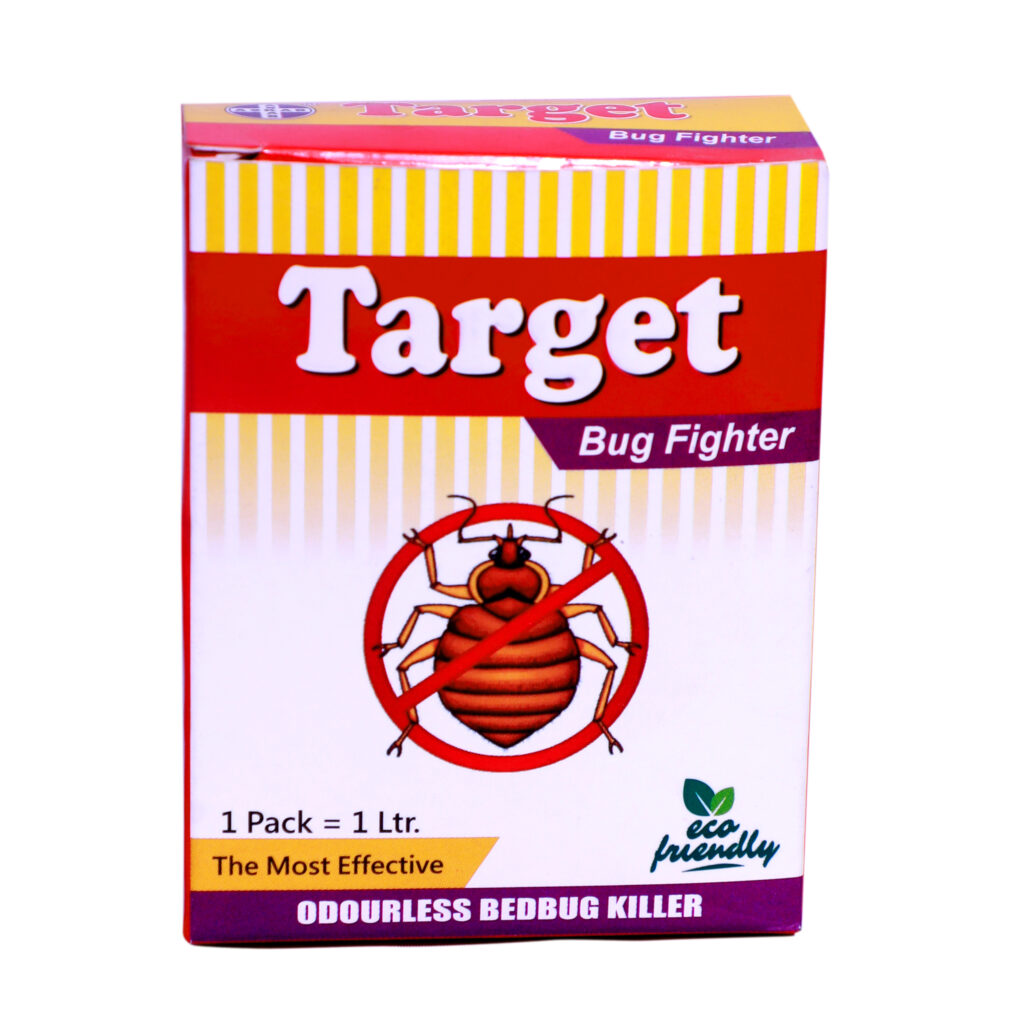
Target Bug Fighter
A granule-form, odourless formula specifically for mattresses, bed frames, sofas and other affected areas. Mix in 1 litre of water and spray every corner of the room, the bed, sofa and cupboard — at least twice a week, ideally at night. Rooms can be used again after about 1 hour.
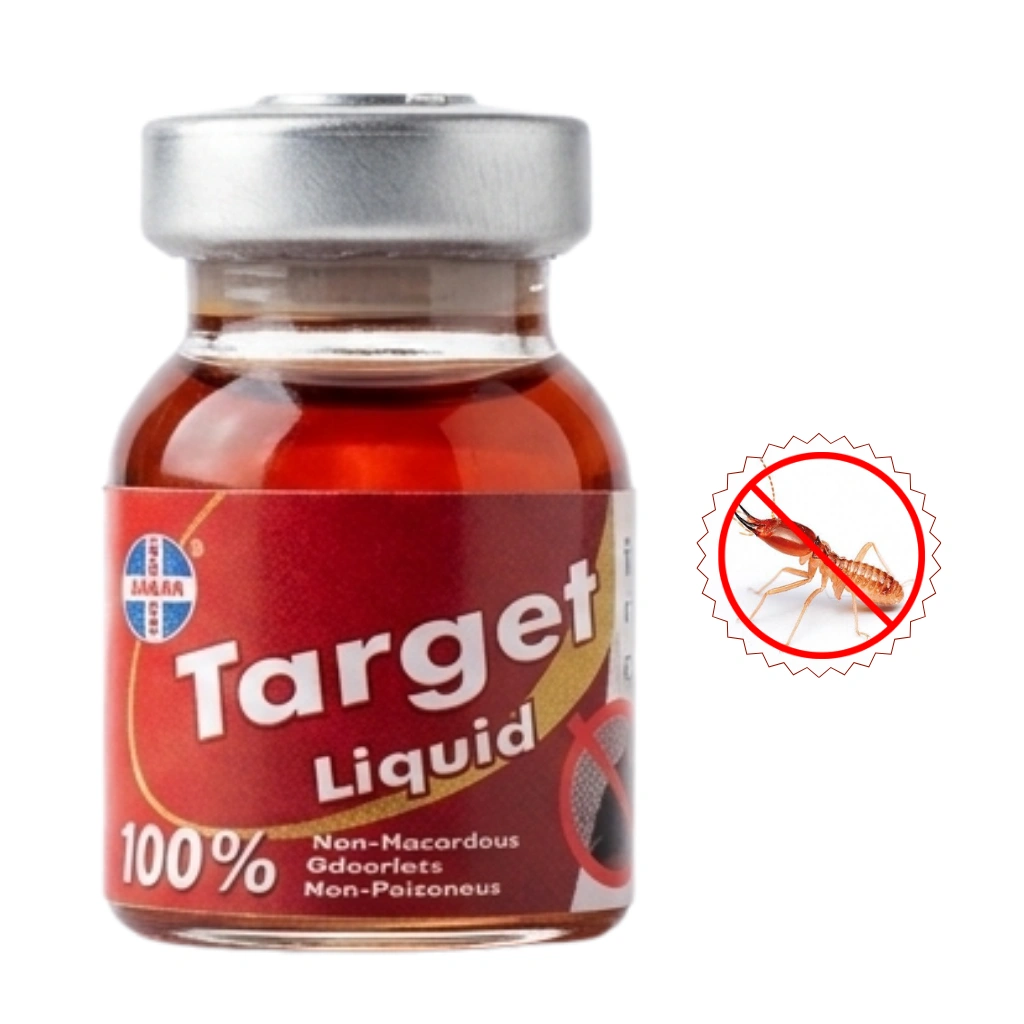
TARGET 5ML
A liquid concentrate — mix 5ml in 1 litre of water and spray corners, the bed, sofa and cupboard at least twice a week for extended protection against small and large bed bugs.
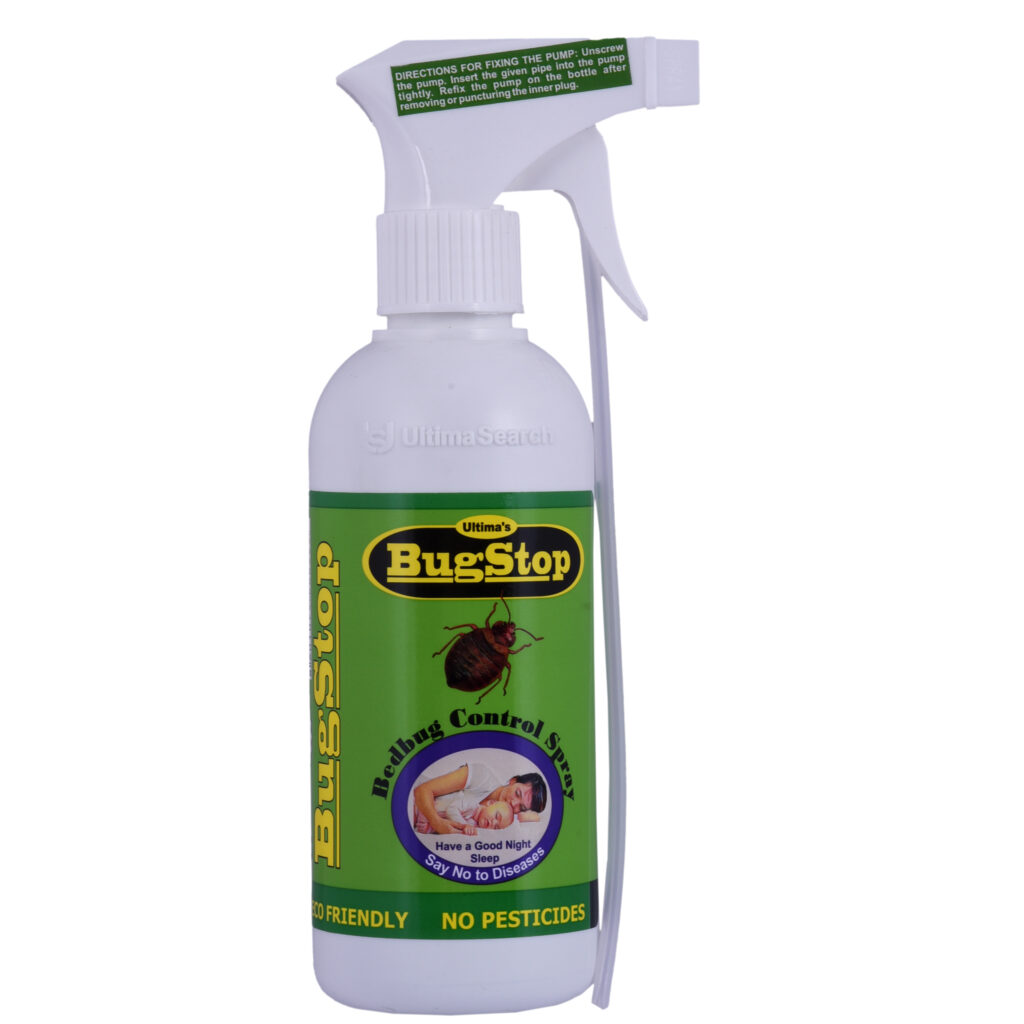
ULTIMA BUGSTOP
A ready-to-use, pesticide-free contact spray made with natural, herbal ingredients — positioned as suitable for use around children and pets. A "Bugstop Pro" variant with Propoxur 1% is also available for broader household pest management including cockroaches and ants.
For larger or persistent infestations, professional pest management may be necessary.
Common Mistakes During Bed Bug Treatment
Treating only the mattress
Bed bugs hide in the frame, headboard, furniture and surrounding cracks too.
Using too much pesticide
More isn't better — it creates unnecessary risk. Always follow the label.
Random household chemicals
Chemicals not designed for bed bug control can damage furniture or create harmful fumes.
Moving infested furniture
Moving a mattress, sofa or chair to another room can spread the infestation.
Discarding furniture immediately
An infestation doesn't automatically mean everything must be thrown out — treatable items can often stay.
Treating once and stopping
Eggs or hidden insects can survive an initial treatment — continue checking and monitoring.
Preventing Bed Bugs From Coming Back
- Inspect second-hand furniture before bringing used mattresses, sofas or beds into your home.
- Check luggage after travel — inspect luggage and clothing rather than immediately placing everything around the bedroom.
- Reduce clutter — keep the area under and around the bed clean and accessible for inspection.
- Regularly inspect your mattress — periodically check seams, bed frames and headboards; early detection makes control much easier.
- Use mattress encasements to reduce hiding opportunities and simplify inspection.
- Monitor bed legs with interceptors as an ongoing monitoring method.
How Long Does It Take, and When to Call a Professional?
There's no universal timeline — duration depends on infestation size, number of hiding locations, whether eggs are present, furniture type, treatment method, thoroughness, and whether nearby rooms are affected too. Bed bug control generally requires patience and monitoring rather than an instant fix.
Quick Bed Bug Control Checklist
Pestocart Bed Bug Protection Products
Real products, live from pestocart.com/bed-bug-protection.
India's Leading Online Pesticide Hub
Barnagarwala Chemicals — Trusted Since 1968
Pestocart is run by Barnagarwala Group, established in 1968, with a long-standing focus on quality chemical and pesticide products at competitive pricing. The site offers cash on delivery, 100% secure payment, and a money-back guarantee backed by its return and refund policy.
Frequently Asked Questions
Yes. They hide along mattress seams, folds, piping and other protected areas, and may also live in the bed frame, headboard and nearby furniture.
Washing helps, but alone may not reliably eliminate all bed bugs. High-temperature drying is an important part of treating washable items.
Not necessarily — a mattress may be treatable depending on its condition and the infestation. A suitable encasement can also help isolate bed bugs inside it.
Yes — cracks, joints, screw holes, drawers and other protected areas of wooden furniture are common hiding spots.
Yes — through cracks, belongings, furniture and other pathways. Moving infested items between rooms can also spread them.
No. Bed bug infestations aren't simply a result of poor cleanliness — they enter homes through luggage, used furniture, clothing and other belongings.
It depends on the infestation and treatment method. Control often requires inspection, treatment and continued monitoring rather than one single action.
Shop Bed Bug Protection
Sprays and formulas for mattresses, bed frames, sofas and furniture — treat the whole area, not just the spot you can see.
Cash on Delivery · 100% Secure Payment · Money-Back Guarantee